
A Foundation shaped by surfing, service and long-term responsibility to the coast.
Surfing Swami Foundation builds long-term opportunities for young people and athletes through surfing, Stand Up Paddling, education, ocean responsibility and coastal community programmes.
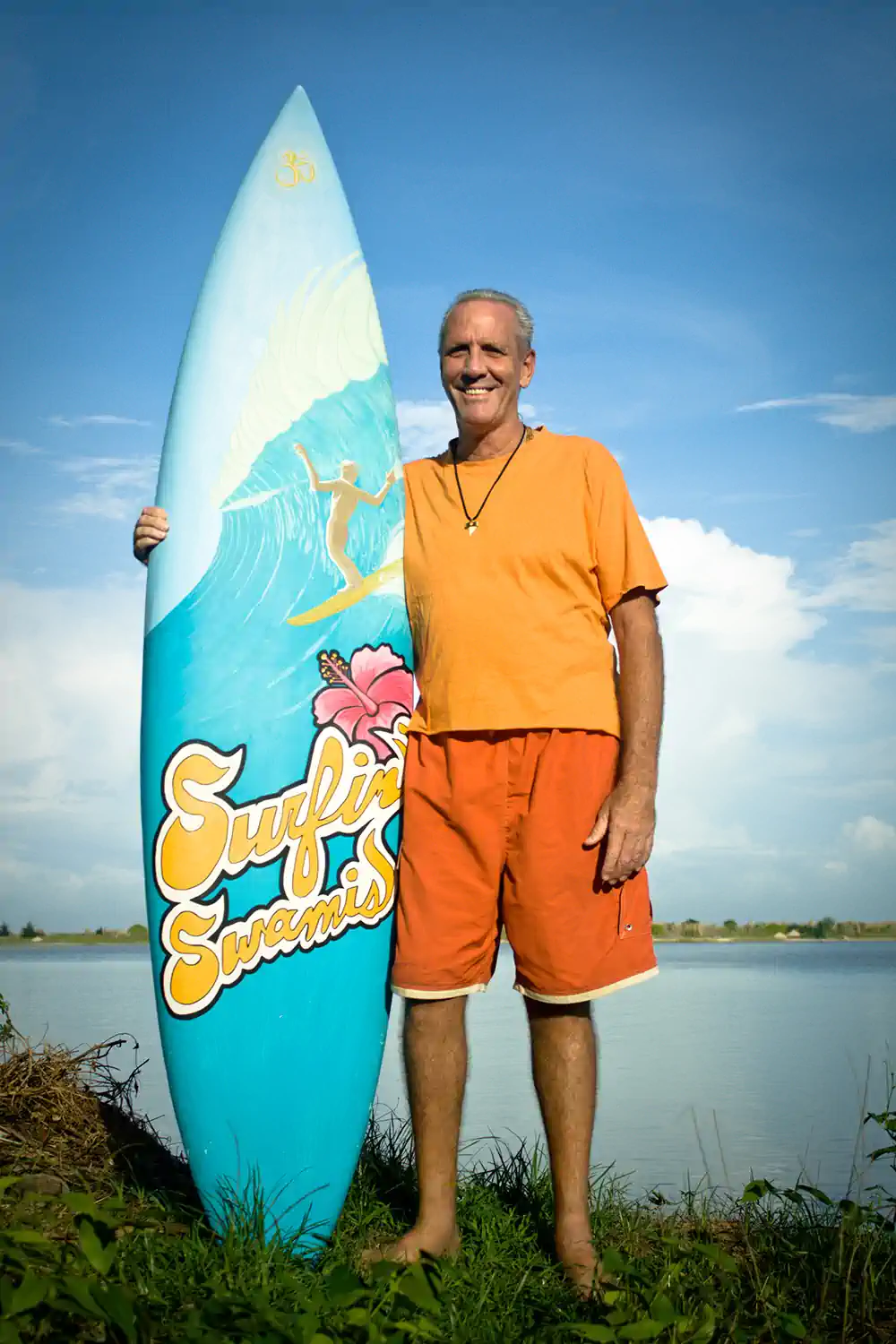
Talent is present. Access is not evenly distributed.
India’s coastline has young people with interest and talent, but access to equipment, coaching, safety, education-linked development, competition and long-term support remains uneven.
Living near the ocean does not automatically create a safe or sustainable pathway into ocean sport.
- Safe access
- Supervised ocean entry, water confidence and clear safety practices.
- Equipment
- Access to boards, leashes, safety gear and other resources tied to defined needs.
- Coaching
- Regular instruction, mentoring, feedback and progression over time.
- Education
- Development programmes that connect ocean sport with school continuity, discipline and wider learning.
- Competition
- Appropriate exposure, preparation and practical support for participation.
- Long-term support
- Clear progression beyond a first session, isolated event or short-term intervention.
A clear direction for the work.
Vision
Coastal communities where young people can learn safely, stay connected to education, develop as athletes and leaders, and take responsibility for the ocean around them.
Mission
To create safe access, structured development and long-term opportunity through surfing, Stand Up Paddling, education and ocean responsibility.
From a real need to a visible record.
The Foundation keeps each programme grounded in a defined need, local delivery, honest status and clear reporting.
View Transparency-
Start with a real need
Identify a defined group and understand the practical gap before designing the programme.
-
Build locally
Work through local schools, communities, coaches and partners who understand the place and the people involved.
-
State the stage honestly
Explain whether a programme is being planned, prepared, delivered or completed, including its current limits.
-
Track delivery and outcomes
Record what was delivered, what it cost and what changed, using a clear reporting method.
-
Publish reports and learning
Make relevant documents, results, limitations and lessons available through the Foundation’s transparency system.
Structured for responsible, accountable work.
Surfing Swami Foundation operates as a Section 8 company under the Companies Act, 2013.
- Legal structure
- Section 8 company
- Incorporated
- 17 March 2017
- CSR registration
- CSR00030602
Governance and public records
Legal records, governance information, policies, reports and financial documents are organised through the Foundation’s Transparency page.