
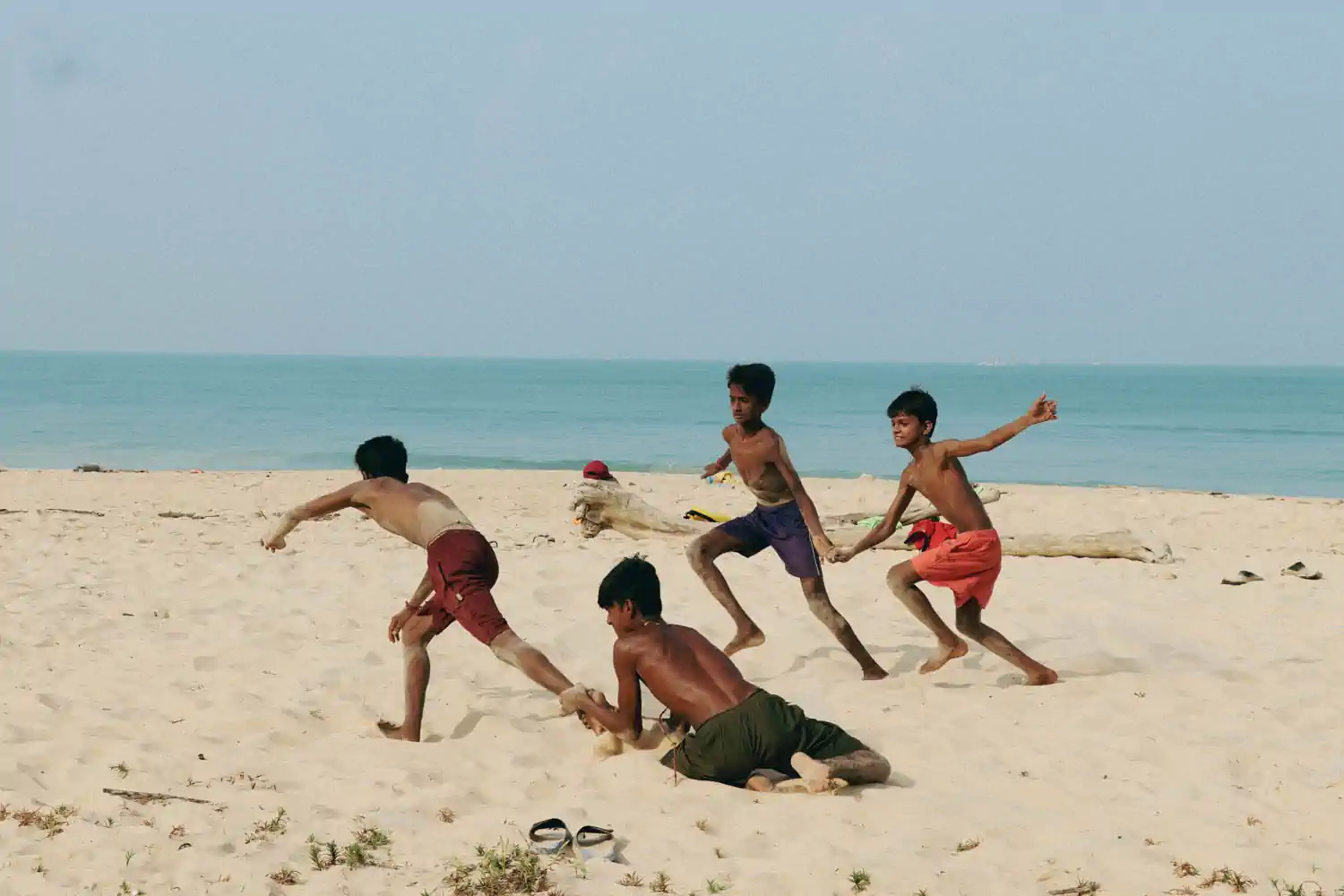
Flagship programme | Mulki, Karnataka
Surfing as a pathway to education, leadership and opportunity.
Wave Makers is an eight-year development programme for children from coastal communities, beginning in Class 5 and continuing through Class 12. Surf training is the motivational engine for school attendance, mentorship, nutrition, confidence and a real pathway after graduation.
The problem and the programme idea
Living near the ocean does not automatically create opportunity.
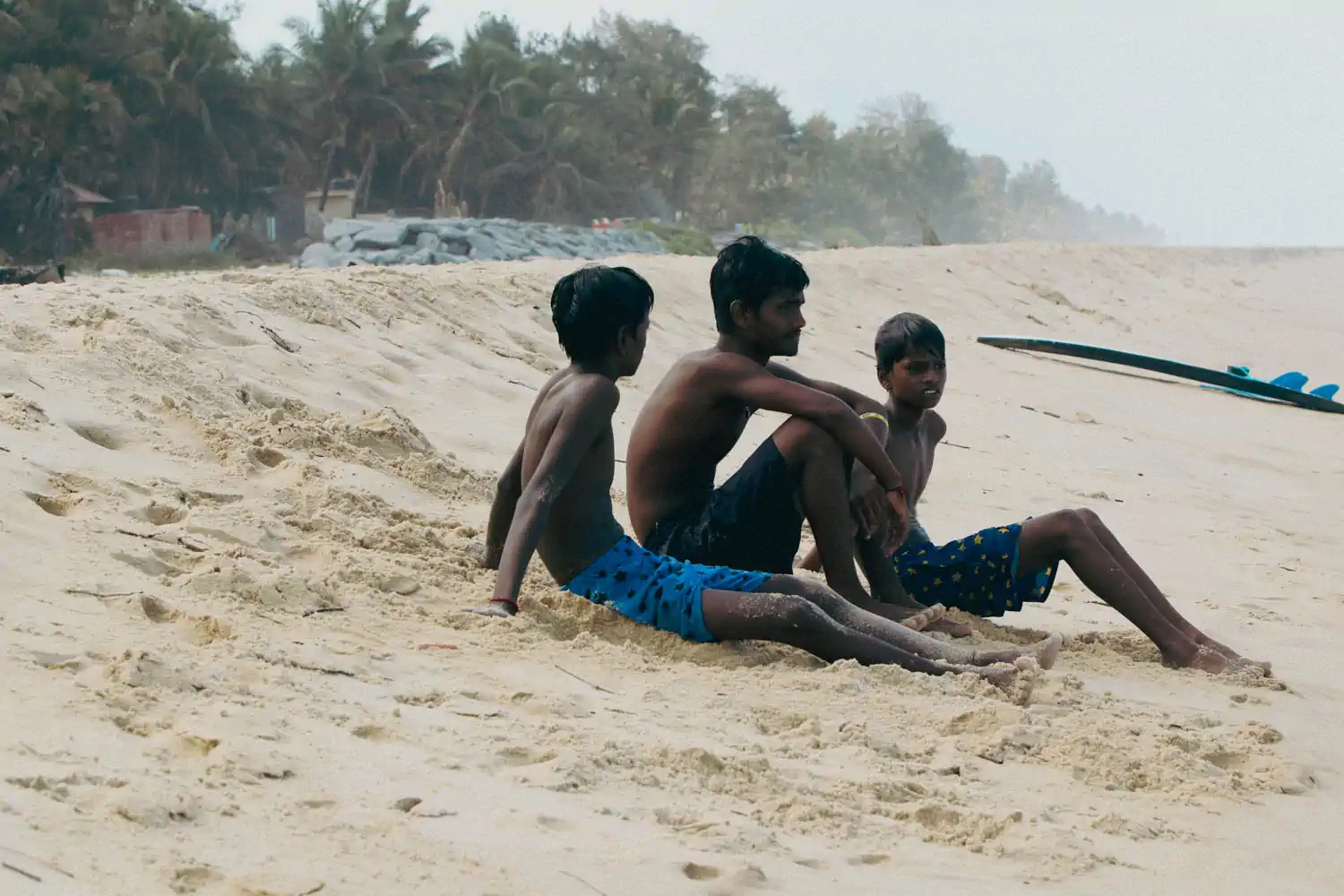
Children from low-income coastal families can face pressures that weaken school continuity and limit access to structured sport, trusted mentorship and future pathways.
The gap
Interest and ability are only a starting point. Children also need safe access, consistent guidance, equipment, school connection and adults who can support them over time.
The programme idea
Wave Makers connects something children want to do with something that expands their choices. Structured surf training becomes the motivational engine for education, discipline, confidence, mentorship and long-term preparation.
Education commitment
School attendance remains central to surf participation.
The programme requires a minimum 75% school attendance rate across the academic year, verified through partner schools.
Support before exclusion
When attendance falls because of illness, family crisis or genuine economic hardship, the Foundation works with the child, family and school on practical support and an agreed recovery plan. A child is not removed automatically.
Six programme pillars
Six commitments that hold the programme together.
These are not separate activities. They are the structural commitments that guide how Wave Makers is designed, funded and eventually delivered.
Attendance as the contract
School attendance is verified through partner schools. Where genuine hardship affects continuity, the response is support and an agreed recovery plan.
The ocean as classroom
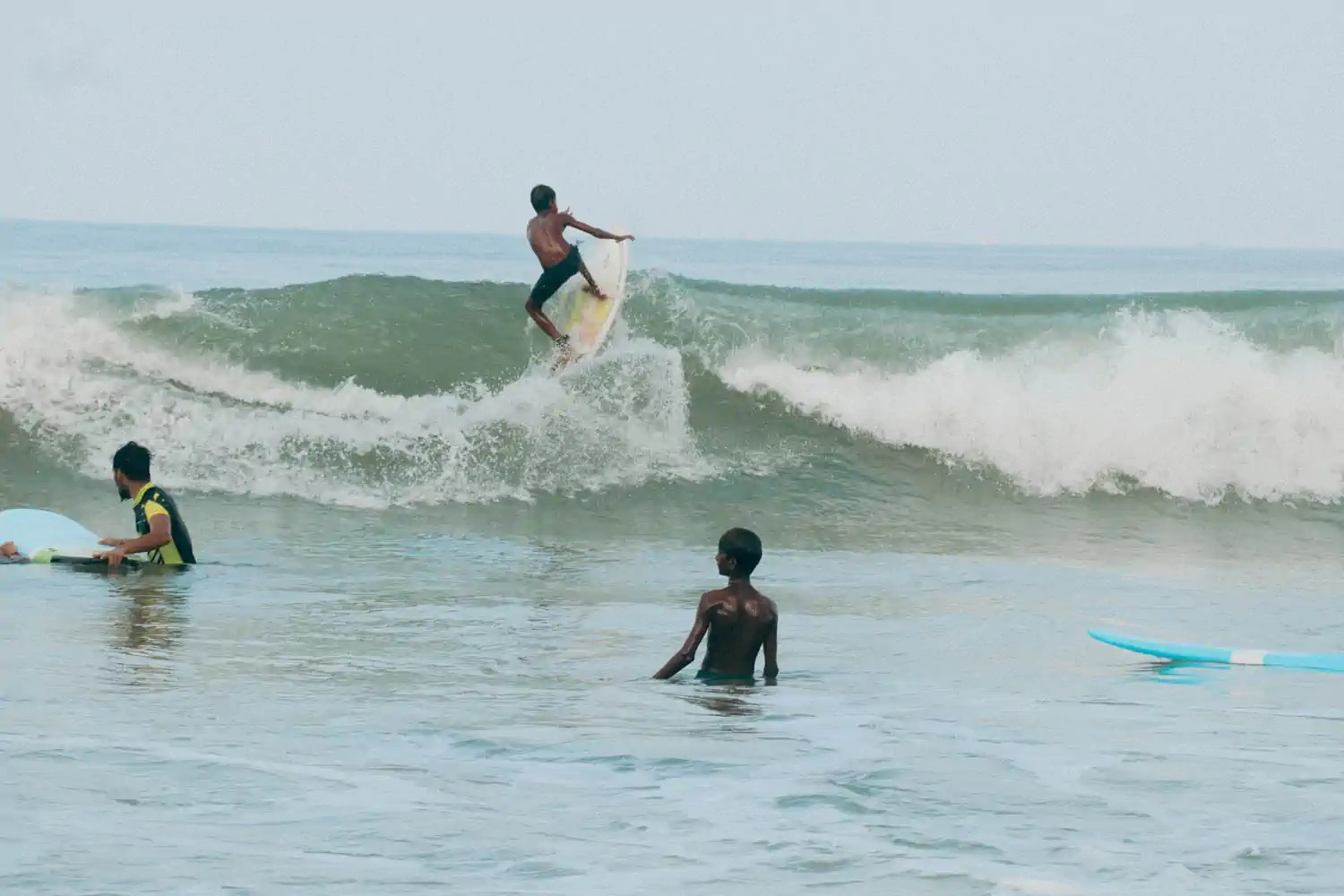
Surf sessions connect discipline, resilience, curiosity, confidence and learning through direct experience.
Nutrition as foundation
Planned nutrition support forms part of the programme model and will be connected to verified attendance and operational readiness.
Community rootedness
Families, schools, panchayats and local Field Coordinators are intended to become active partners in the programme.
Mentorship throughout
The programme model assigns each child a named Field Coordinator and regular check-ins covering attendance, wellbeing and progress.
A real exit into opportunity
Graduation pathways will be funded and secured before any certification, scholarship or leadership opportunity is promised.
Eight years, four development bands
The programme changes as each child grows.
Wave Makers is designed as a developmental journey from Class 5 to Class 12. Each band responds to a different stage of education, confidence, responsibility and future preparation.
The milestones below are planned programme benchmarks.
-
Explorers
Belonging, water safety and confidence.
Children build trust in the ocean, the programme and themselves through foundational surf skills, play, observation and learning connected to the natural environment.
Planned milestonePaddles out with growing independence, demonstrates basic water safety and maintains the school attendance commitment.
-
Builders
Skill, discipline and academic connection.
Surf progression becomes more structured while mathematics, science, journaling and personal responsibility are integrated into the programme experience.
Planned milestoneParticipates in a first local surf event and completes a short learning project for school or community.
-
Challengers
Retention, resilience and pathway planning.
As examinations and family pressures increase, the programme places greater emphasis on school continuity, life skills, mentorship and preparation for future options.
Planned milestoneCompletes the Class 10 board examination stage and begins a documented graduation pathway plan.
-
Leaders
Mentoring, leadership and transition.
Senior participants support younger children while building financial awareness, communication skills and preparation for a confirmed education, training or leadership pathway.
Planned milestoneCompletes Class 12 and transitions into a funded and confirmed graduation pathway.
What must happen before launch
The programme will not enrol children before the foundations are ready.
A strong curriculum is only one part of readiness. Wave Makers also requires trusted community relationships, formal school cooperation, safeguarding, trained people, safe equipment and confirmed funding.
The eight-year model, programme pillars and initial Band 1 curriculum architecture have been developed.
School agreements
Required before launchFormal MoUs with a minimum of three government schools, including an agreed process for monthly attendance data and support for children at risk of falling below the benchmark.
Community and panchayat agreements
Required before launchCommunity entry, family consultation, local endorsement and clear written agreements covering programme presence, responsibilities and child protection.
Safeguarding and trained staff
Required before launchA final safeguarding policy, trained programme staff, water-safety systems and locally rooted Field Coordinators with clear roles and reporting protocols.
Baseline and voluntary enrolment
Required before launchA documented community baseline, clear eligibility process, voluntary child participation, family orientation and signed participation agreements.
Equipment and operating systems
Required before launchAppropriate surfboards, leashes, rash guards, safety equipment, first-aid resources, secure storage, transport arrangements and nutrition-delivery systems.
Confirmed operating and pathway funding
Required before launchSufficient funding for programme delivery and for any scholarship, certification or leadership pathway promised to participating children and families.
How success will be measured
Report what is ready now. Measure outcomes only when they exist.
Wave Makers will publish each measure with its reporting period, method, baseline and limitations. Until implementation begins, the Foundation reports programme readiness rather than beneficiary impact.
Pre-implementation readiness
Current reporting covers school and community agreements, safeguarding, staffing, equipment, baseline preparation, funding and the other conditions required before enrolment.
| Measure | What will be tracked | Reporting point |
|---|---|---|
| School attendance rate | Attendance recorded through partner-school data, including the proportion of enrolled children meeting the annual attendance benchmark. | During each programme year, with the relevant academic period and data source stated. |
| Programme retention | Children remaining in the programme after one, three and five years, together with recorded reasons when participation ends. | After each completed retention period. No long-term rate will be published before that period exists. |
| Band progression | Progress through the defined learning, water-safety, education and leadership milestones for each development band. | At the end of each programme year, based on documented milestone records. |
| Graduation pathway uptake | Band 4 completers moving into a confirmed education, certification, vocational or community-leadership pathway. | Annually after the programme reaches its first graduating cohort. |